
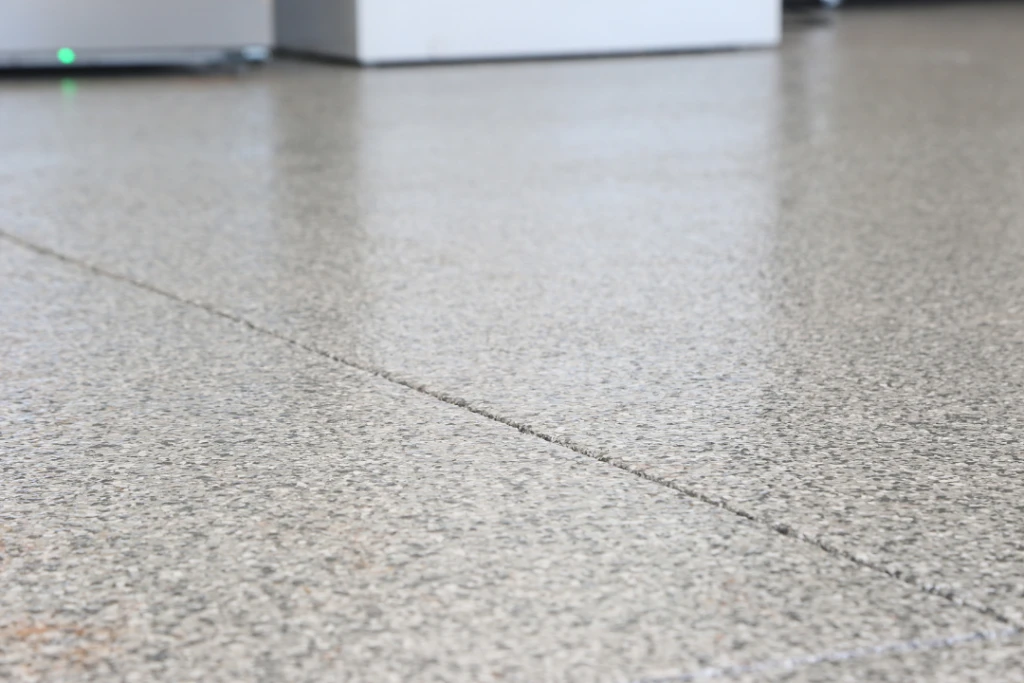
Polyurea Garage Floor Coating: 5x Stronger Than Epoxy
When I decided to expand beyond landscaping and get into concrete coatings, I spent months researching before I ever pitched my first job. I wasn’t interested in offering the same product every other company in Kansas City was already selling. That research is how I landed on polyurea garage floor coating, and it’s the single best business decision I’ve made since starting Peak Concrete Coatings.
What Makes Polyurea Different
Polyurea is a spray or roll-applied coating that cures into an extremely tough, flexible surface — a very different chemistry than traditional epoxy. Where epoxy is rigid and can crack under stress or temperature swings, polyurea flexes with the concrete beneath it. That matters a lot in Kansas City, where our slabs go through real freeze-thaw cycles every year.
The strength difference isn’t just marketing. Independent breakdowns from coatings manufacturers like ArmorThane put polyurea at multiple times stronger than epoxy, with far better flexibility and scratch resistance. Other industry sources echo the same numbers — Level 10 Coatings notes that polyurea can be up to five times stronger than standard epoxy, which lines up with what we see in the field every single day. That’s not a small edge — it’s the difference between a floor that chips under a dropped toolbox and one that shrugs it off.
Why We Chose Penntek Polyurea Specifically
At Peak, we exclusively install Penntek polyurea systems. A few reasons that made the decision easy for me:
- One-day installation. Most epoxy jobs need multiple days and several coats with drying time between each. Polyurea cures fast enough that we can often complete a garage in a single day, so you’re not living without your garage for a week.
- Lifetime residential warranty. I wanted to stand behind our work in a way that actually meant something, not a warranty full of fine print.
- Better chemical and stain resistance. Oil, antifreeze, brake fluid — polyurea shrugs off the stuff that eventually stains and degrades a standard epoxy floor.
- Low odor, low VOC. This matters more than people realize, especially for an attached garage. Indoor air quality is a real concern with some coating chemistries — the EPA has documented that VOC levels are consistently higher indoors than outdoors, and polyurea systems like ours are formulated to minimize that exposure.
Where Polyurea Makes the Biggest Difference
Polyurea garage floor coating isn’t just for garages, even though that’s where most homeowners start. We use the same system for:
- Basements, where moisture resistance is critical.
- Commercial spaces, where heavy foot traffic and equipment demand a tougher surface — see our commercial coatings page for examples.
- Outdoor patios and pool decks, where UV stability and slip resistance both matter. Our outdoor coatings page covers that in more detail.
- Industrial facilities that need resistance to impact, chemicals, and constant abrasion.
Is Polyurea Worth the Investment?
I’ll be honest with you the way I would with a neighbor: polyurea typically costs more upfront than a basic epoxy kit or a bargain contractor’s epoxy install. But when you factor in a single-day installation, a lifetime residential warranty, and a floor that’s built to outlast the house around it, the math works out in your favor almost every time. I didn’t build this business around the cheapest option — I built it around the one I’d actually put in my own garage.
If you want to see the difference for yourself, our gallery has real before-and-afters from projects across the Kansas City metro. And if you’re ready to talk specifics, give us a call — we’ll walk your space and give you a straight answer about what it’ll take.
Author: Jake Moszyk